The Story Of
About
Jamaica Soundscape is a digital atlas of the places in which Jamaican music was made. It follows two connected but distinct geographies: Kingston, where the music’s foundational infrastructure was built, and London, where Jamaican migrants, musicians, sound systems, record shops and audiences created a major diasporic centre for its development.
Across both maps, Jamaica Soundscape documents recording studios, sound system yards, dancehalls, record shops, labels, performance venues, community halls, institutions and other musical landmarks from the 1950s to the 1980s.
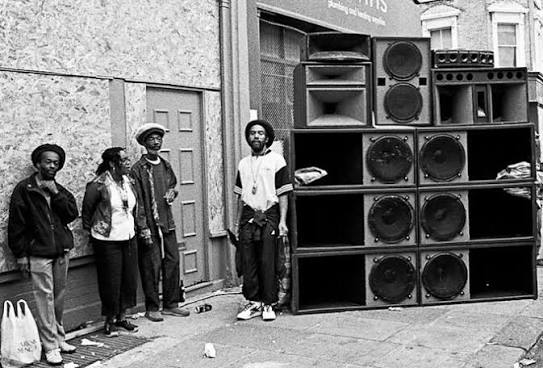
Kingston map
The Kingston map traces the creation and dissemination of Jamaican music at its source. It maps the city’s studios, pressing plants, record shops, sound system lawns, dancehalls, labels, schools, musicians’ meeting places and neighbourhood networks that produced ska, rocksteady, reggae, dub and dancehall.
This is a map of the local infrastructure through which Jamaican music was imagined, recorded, tested, pressed onto vinyl and then carried across the island and ultimately to the outside world. It foregrounds Kingston’s creators, communities and districts as the foundation of a global musical culture.
London map
The London map tells a different but related story: how Jamaican music took root, circulated and changed in Britain. It maps the record shops, sound systems, youth clubs, community halls, studios, nightclubs, markets and Carnival sites through which London’s Jamaican immigrant community built its own musical world.
This website records a diasporic culture: one shaped by migration, local enterprise and transatlantic exchange, resulting in a dynamic Black British youth culture. In London, Jamaican musical forms were sustained and transformed, helping to generate British reggae, lovers rock, dub, sound system culture and new connections with punk, jungle, drum and bass, dubstep and countless other forms.
Our mission
Our mission is to preserve, connect and share the places behind Jamaican music history. By locating them on the maps and assembling memories, images, recordings and archival traces, Jamaica Soundscape makes this cultural heritage easier to explore, discuss and pass on. We aim to honour both Kingston’s foundational role and London’s distinct diaspora history, while recognising that the story extends far beyond either city.
Help build the map
Jamaica Soundscape is a living public archive, and we welcome your knowledge, memories and materials. If you remember a studio, sound system, record shop, dancehall, blues party, nightclub, youth centre or other music landmark – or if you have old photographs, flyers, posters, tickets, newspaper cuttings, recordings, home videos or film – we would love to hear from you.
Historical images and film footage are especially valuable, including material that may seem informal or everyday: a family photograph at a dance, a street view showing a vanished shopfront, or a few seconds of video from a local event can help recover places and stories that official archives have overlooked. Please get in touch to share information, identify locations, correct entries, or to discuss permission for us to feature your material with full credit.
Acknowledgments
This project has been generously supported by Research England and the Higher Education Innovation Fund (HEIF), whose funding has made this research and its public dissemination possible. We are also grateful for the endorsement and support of the Windrush Museum.
We warmly thank Matthew Stone for his support in developing the Jamaica Soundscape platform. His technical expertise has helped transform the project's research, archival materials and mapped locations into an accessible public digital resource. Matthew is a researcher in the Department of Computing at The University of the West Indies, Kingston (Jamaica); see his University profile and LinkedIn profile.
Finally, the project team gratefully acknowledges the support of the Research & Innovation Office and The City Law School at City St George's, University of London.
© 2026 Enrico Bonadio and David Katz . All rights reserved.
The texts, narratives, and descriptive content published on this platform, including all venue histories, biographical entries, and editorial annotations contained in the maps, are protected by copyright. All rights in these works are owned jointly by Enrico Bonadio and David Katz.
No part of these texts may be reproduced, distributed, transmitted, adapted, or otherwise used in any form or by any means, including photocopying, recording, or any electronic or mechanical method, without the prior written permission of the copyright owners, except for brief quotations in academic or journalistic work with full and proper attribution.
For permissions enquiries, please contact: enrico.bonadio.1@city.ac.uk or dubwise1@gmail.com